
We’ll guide you through every step of the process to ensure you purchase a profitable four-family home without overpaying or inheriting costly repair and violation issues.

Smooth transaction with limited risk
No pressure to over pay and buy within a certain time period
A team of people that will be with you even after the transaction is complete
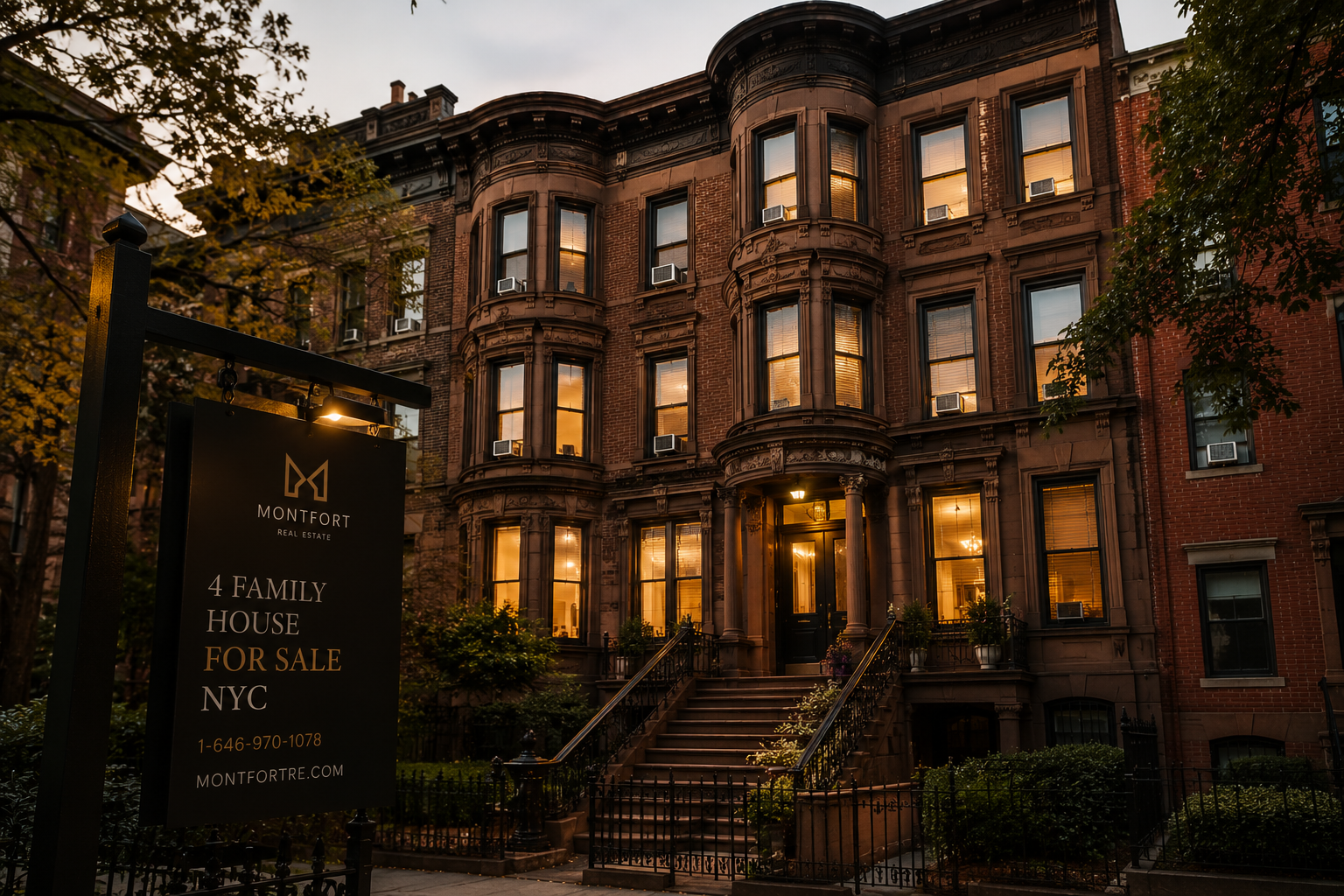
Buying a four-family house in New York City is one of the smartest moves a real estate investor or owner-occupant can make-but only if you understand exactly what you're getting into. These properties combine residential financing opportunities with the operational complexity of a small apartment building, and that unique position demands a buyer who evaluates legal compliance, building systems, tenant stability, operating costs, and long-term ownership strategy-not simply rental income.
With a median listing price for four-family houses in NYC sitting at approximately $1.4M and active listings remaining low, creating a seller-friendly environment, you need a clear str
ategy before you start your property search. I'm Stanley Montfort, and I've spent more than a decade helping buyers navigate the multifamily market across all five boroughs. This guide walks you through everything I tell my clients before they make an offer on a four-family property.
When you're purchasing an income-producing property in New York, credentials and track record matter more than promises.
A mistake I frequently see multifamily buyers make is working with a general residential agent who treats a four-family building like a single-family home with extra bedrooms. These are fundamentally different transactions, and the evaluation process requires specialized knowledge that most agents at firms like Tiger Realty or eXp Realty simply don't focus on day to day.

One of the first things I review with every buyer is whether they truly understand what they're purchasing. A four-family house occupies a unique legal and financial category, and that distinction affects everything from your mortgage options to your long-term ownership obligations.
What legally qualifies as a four-family house: Under NYC's Building Code and zoning regulations, a "1-4 family dwelling" is a building containing up to four dwelling units. The critical document is the Certificate of Occupancy, which must specifically list four units. If the CO states fewer units but additional apartments exist-something I encounter regularly-those extra units are illegal and present serious risk for financing, insurance, and future resale.
The NYC Certificate of Occupancy must align with the property's actual configuration. When I walk through a property and count more doors, kitchens, or bathrooms than the CO supports, that's an immediate red flag that requires investigation before proceeding.
Residential versus investment ownership: Owner-occupying one unit in a multifamily house often results in better financing options, including lower down payments and more favorable interest rates. Pure investment purchases typically require larger down payments (25–35%) and undergo stricter underwriting. Multi-family homes can have four or more units available, but the four-unit threshold is significant because it's the maximum unit count that still qualifies for residential financing programs.
Compared to larger multifamily investments, four-family properties offer a meaningful advantage: small multifamily buildings under six units are outperforming larger ones in some sectors, partly because they avoid many of the regulatory requirements that apply to buildings with six or more units. New York City has over 4,000 multi-family homes for sale, but well-priced four-family buildings in desirable neighborhoods move quickly.
Regulations affect NYC multifamily properties significantly regarding rent stabilization and legality. Before making an offer on any four-family property, I verify several layers of legal compliance:
Certificate of Occupancy verification: The CO is the definitive document showing how many units are legal, what use each floor has, and whether residential occupancy is lawful. Buildings constructed before 1938 that lack a CO may be exempt, but any alterations or changes in occupancy since then typically require an amended CO or Letter of No Objection. I always request and review this document before my clients spend money on inspections.
Building permit history and alteration documentation: Any major alteration-splitting apartments, combining units, changing layouts-requires permits filed through the NYC Department of Buildings. Unpermitted work can require expensive retroactive correction, including potentially obtaining a new CO. One question I always encourage clients to ask: has any work been done on this building without permits?
HPD violations: Properties with open violations for housing conditions, fire safety, or building maintenance degrade value, impose legal and financial risk, and can impact your ability to secure financing or insurance. I check HPD housing violation history for every property I evaluate.
Rent stabilization considerations: Many buyers assume that four-family buildings are automatically exempt from rent regulation. While buildings with fewer than six units are often exempt from rent stabilization, exceptions exist based on historical unit counts, prior regulatory agreements, or tax benefit programs like 421-a or J-51. For rent-stabilized lease renewals starting October 1, 2025 through September 30, 2026, the allowed increases are 3% for one-year leases and 4.5% for two-year leases. Then, there is a rent freeze for leases renewing from October 1, 2026 through September 30, 2027-a factor that directly affects income projections for any building with regulated units.
The four-family house market in NYC is characterized by tight inventory and rising rents, which makes financing strategy critical. How you structure your purchase affects not only your monthly cash flow but your ability to compete in a tight market.
| Financing Type | Best For | Typical Down Payment | Key Requirements |
|---|---|---|---|
| Conventional Residential (Fannie Mae / Freddie Mac) | Owner-occupants | 20–25% | Buyer must occupy one of the units as a primary residence |
| FHA Loan | First-time buyers and owner-occupants | As low as 3.5% | Owner occupancy required; property must meet FHA condition standards |
| DSCR Loan | Investors and non-owner-occupants | 25–35% | Property DSCR must meet lender requirements (typically 1.15×–1.25×) |
| Portfolio / Local Bank Loan | Experienced investors and unique properties | Varies | Relationship-based lending with flexible underwriting guidelines |
Conventional mortgages vs. commercial loans: A residential mortgage backed by Fannie Mae, Freddie Mac, or FHA can be used for 1-4 unit properties if the buyer intends to occupy one unit. These loans offer better interest rates and lower down payments than commercial financing. DSCR loans, where the property's net operating income is used to judge whether it can cover debt service, are more appropriate for pure investment purchases. Some lenders now require a DSCR of 1.25 or higher for four-unit properties unless the buyer has significant equity.
How rental income factors into qualification: Yes, lenders will consider existing tenant income when qualifying you for a loan. They'll require a rent roll with historical rents, current leases, and occupancy data. Vacancy and collection loss rates are factored in-most lenders assume 5% vacancy/collection loss for residential units.
Down payment assistance: NYC's HomeFirst Program offers forgivable loans up to $100,000 toward down payment and closing costs for first-time homebuyers purchasing 1-4 family homes. Eligibility requires owner-occupancy, household income at or below 120% AMI, and a minimum 3% down payment from the buyer's own funds. Purchase price caps apply by borough-for four-unit properties in Kings County (Brooklyn), the limit is approximately $1,404,000.
Investors are advised to maintain several months' worth of operating expenses in reserve for multifamily properties, regardless of which financing path you choose.
When evaluating a four-family property, I walk buyers through a structured framework that goes beyond the listing price. High demand exists for free-market units in NYC due to the ability to set market rents, but that potential only matters if the numbers actually work.
Rental income analysis: I review the current rent roll-what each unit pays, when leases expire, tenant payment history, and how current rents compare to market rates. Citywide rents in NYC increased by 1.48% year-over-year as of June 2026, and rental demand in NYC is strong with Manhattan rents increasing by 4.14% year-over-year by June 2026. But income projections must be property-specific, not based on borough averages.
Operating expenses to budget:
Vacancy and collection considerations: Many buyers underestimate the impact of vacancy and non-payment. Even in neighborhoods with low market vacancy (under 5%), collection issues can affect cash flow. Properties may not be verified by brokers or MLS, so independent verification of occupancy and income is essential.
One of the most expensive surprises in a four-family purchase is discovering that major building systems are at the end of their useful life. Here's what I prioritize during every property evaluation:
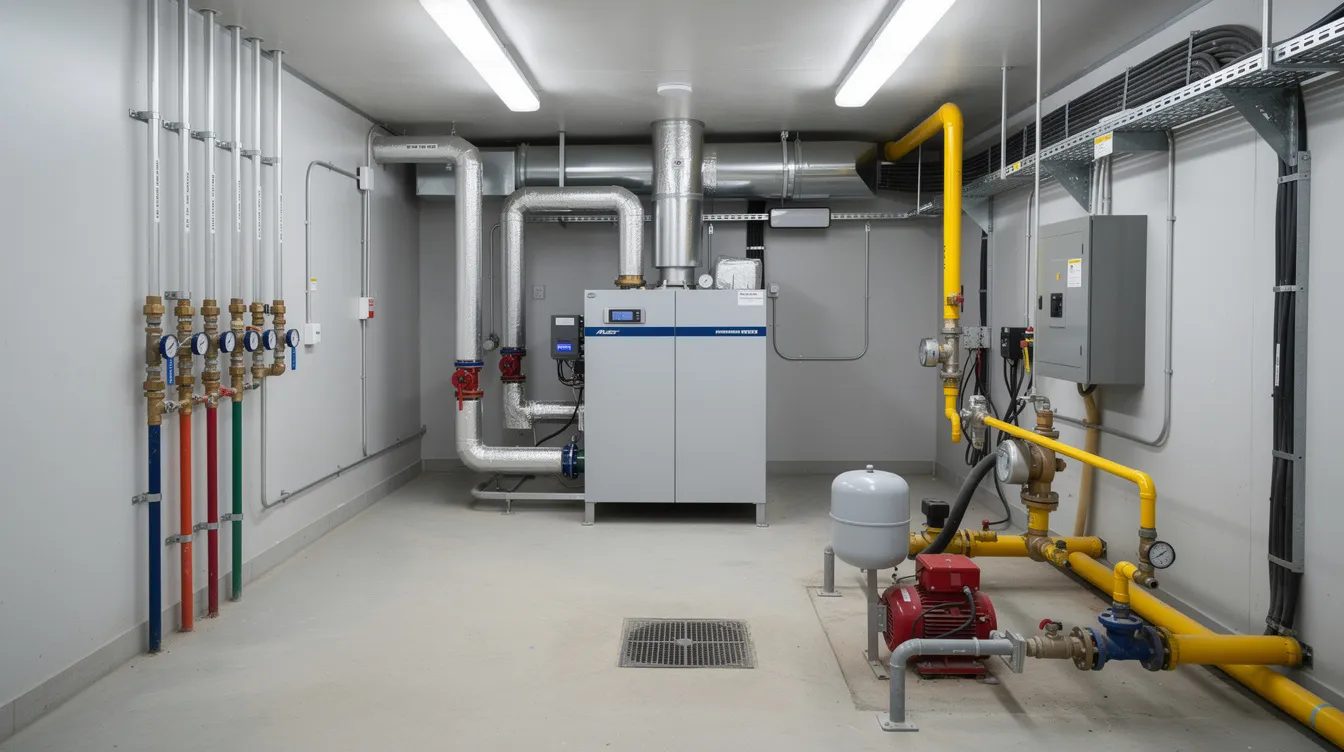
Shared mechanical systems: Four-family buildings typically have shared boilers, water heaters, and sometimes shared electrical panels. When one system fails, it affects all four units simultaneously. I always check the age and condition of the boiler (replacement cost: $15,000–$30,000+), roof condition (replacement: $50,000+), and plumbing/electrical infrastructure.
Utility configurations: Are units individually metered for gas and electric? If not, the owner bears utility costs, which significantly affects operating expenses. Separating meters retroactively is expensive and requires permits.
Deferred maintenance checklist:

After offer acceptance, I guide clients through a structured due diligence process that typically spans 30–45 days before closing, with the total timeline from offer to closing running 60–90 days depending on complexity.
Step-by-step timeline:
Offer acceptance and contract execution (Days 1–7): Attorney review, contract signing, deposit submission
Document review (Days 7–21): Collect and review CO, property deed, tax map, zoning classification, building permits, alteration history, HPD violations, rent rolls, all active leases, 12 months of operating expenses, utility bills, and insurance claims history
Professional inspections (Days 14–28): General building inspection (structure, roof, façade), mechanical systems, plumbing/electrical, fire safety, environmental testing (lead paint, asbestos, mold)
Financing and appraisal (Days 14–35): Loan application, property appraisal, underwriting
Title search and clearance (Days 21–40): Confirm legal ownership, check for liens, judgments, tax liens, open DOB or HPD orders
Closing preparation and walk-through (Days 35–60+): Final document review, closing statement verification, property walk-through
Potential complications I watch for: Mixed-use designations that affect zoning, illegal conversions (apartments created from basements or storage spaces), co-op or shared ownership complications, and discrepancies between the CO and the building's actual configuration.
Location significantly affects rental demand and potential appreciation in NYC neighborhoods. When I help clients evaluate a neighborhood for a four-family purchase, I consider:
Over 150 transactions have taught me where buyers most commonly go wrong. Here are the mistakes I work hardest to prevent:
Assuming the CO matches reality. Extra illegal units might be rented and generating income, but they're not legal for financing, insurance, or resale purposes. I've seen deals fall apart at the appraisal stage because lenders won't finance buildings with undocumented units.
Underestimating operating and capital expenses. Many buyers focus on gross rental income and forget about property taxes, insurance, maintenance, utilities, management costs, and the inevitable capital expenditures. Older NYC buildings need significant investment over 10–20 years.
Ignoring rent regulation status. Even if a building has only four units, regulated units may exist due to historical unit counts or regulatory agreements. Regulated units have ceilings on rent increases, restrict evictions, and require registration-all of which affect your income projections.
Over-leveraging. Choosing financing with too high an LTV or too low a DSCR without adequate reserves is a recipe for trouble when a boiler fails or a tenant stops paying rent.
Skipping professional inspections. Relying on a seller's disclosure or a quick walk-through instead of hiring specialists for structural, mechanical, and environmental inspections can lead to six-figure surprises after closing.
Ignoring the listing details. Properties may not be verified by brokers or MLS, so always conduct independent verification of every claim made on a website or listing description.
Several neighborhoods in NYC are emerging as attractive options for multifamily investors. Here's where I most commonly help buyers find and evaluate four-family buildings:
| Borough | Key Neighborhoods | Market Notes |
|---|---|---|
| Brooklyn | Bedford-Stuyvesant, Crown Heights, Bushwick, East New York | Highest concentration of four-family properties, strong rental demand, and pricing that varies significantly by neighborhood. |
| Queens | Astoria, Jackson Heights, Elmhurst, Jamaica | More affordable entry points, excellent public transportation, and a diverse tenant base. |
| Bronx | Fordham, Riverdale, University Heights, Morrisania | Lowest entry prices in NYC, attractive rental yields, and greater deferred maintenance considerations. |
| Manhattan | Washington Heights, Inwood | Limited inventory, premium rental demand, and higher acquisition costs. |
| Staten Island | Various neighborhoods | Larger lot sizes, a different tenant profile, and less dependence on public transit. |
The real estate market across New York continues to favor sellers in the four-family segment. When evaluating specific neighborhoods, I help clients analyze not just current conditions but five- and ten-year trends in rental growth, development activity, and demographic shifts. The country's largest rental market offers tremendous opportunity, but each neighborhood tells a different story.
While I maintain confidentiality regarding specific client details, these examples illustrate the types of challenges I help buyers navigate:
Bedford-Stuyvesant CO discrepancy: A buyer found a listing for a "four-family" property at an attractive price, but my review of the Certificate of Occupancy revealed it was legally a three-family dwelling with an illegal basement apartment. We renegotiated the sale price to account for the income loss and legalization costs, saving the buyer over $60,000.
Crown Heights tenant evaluation: A first-time investor was ready to make an offer based on the seller's stated rent roll. My analysis of the actual leases and payment history revealed one unit was three months behind on rent and another had an expired lease with a tenant paying well below market. We restructured the offer with holdbacks for potential vacancy, and the buyer ultimately achieved market rents within eight months of closing.
Astoria financing strategy: An owner-occupant buyer initially pursued a conventional loan with 25% down. After evaluating their financial profile, I connected them with a lender offering an FHA-backed mortgage on the four-unit building with 3.5% down, freeing up capital for immediate repairs to the building's aging boiler system. They also qualified for the HomeFirst down payment assistance program, saving an additional $40,000 in upfront costs.
These outcomes reflect the kind of real estate transaction where specialized knowledge directly translates to measurable financial benefit.
For owner-occupied purchases using residential financing, expect 20–25% down on a conventional loan, or as low as 3.5% with FHA financing. Investment-only DSCR or portfolio loans typically require 25–35% down. NYC's HomeFirst program can provide up to $100,000 in forgivable loans toward your down payment if you meet income and occupancy requirements. You'll need a minimum 3% from your own funds regardless of assistance programs. With a median listing price of approximately $1.4M for four-family properties, your request for financing should be well-documented and pre-approved before you begin your search.
The active search phase varies-some buyers find the right property within weeks, others take several months given the tight inventory. Once an offer is accepted, expect 60–90 days to close, including 30–45 days of due diligence, financing, inspections, and title clearance.
This depends on your proximity to the property, your experience, and your time availability. Self-management saves 8–10% of gross rent but requires handling tenant requests, maintenance coordination, lease renewals, and legal compliance. Many owner-occupants of four-family buildings self-manage successfully because they live on-site. For out-of-state or time-constrained investors, professional management through a licensed firm, whether inc. or sole proprietor, is usually worth the cost.
My services cover the complete purchase process: property identification and evaluation, financial analysis, CO and compliance verification, inspection coordination, financing strategy, offer negotiation, due diligence management, and closing coordination. As your buyer's agent, I represent your interests exclusively-not the seller's.
Not automatically. Rent stabilization most commonly applies to buildings with six or more units. However, buildings that received certain tax benefits (421-a, J-51) or have historical regulatory agreements may have stabilized units regardless of size. I verify the regulatory status of every unit before my clients make an offer.
This is more common than most buyers realize. If the CO lists fewer units than actually exist, those additional units are illegal. This affects financing (lenders won't count illegal unit income), insurance coverage, and resale value. Resolution may require filing for an amended CO, which involves permits, inspections, and potentially significant construction to meet code requirements.
Finding the right four-family house for sale in NYC requires more than browsing listings online. It requires a strategic approach that evaluates legal compliance, building condition, income potential, financing options, and long-term ownership costs-all before you make an offer.
I provide personalized consultations that include custom investment analysis, neighborhood targeting based on your budget and goals, and a clear roadmap from property search through closing. Whether you're a first-time buyer looking to owner-occupy or an experienced investor expanding your portfolio across New York, I'll help you evaluate every four-family opportunity with the thoroughness these complex properties demand.
Phone: 1-646-970-1078 Email: sm@montfortre.com Address: 8 West 126th Street, New York NY 10027
Loading live Google reviews…
Lorem ipsum dolor sit amet, consectetur adipiscing elit. Suspendisse varius enim in eros elementum tristique.
On the Upper West Side, we observed a distinct trend that diverges from the citywide patterns. Speci…
The Harlem brownstone market has seen an increase in sales activity since this time last year. In Q2…
Are you searching for your dream home in one of New York City’s most sought-after neighborhoods? Loo…
Reach out for buyer representation, listing strategy, or a confidential valuation with Stanley Montfort.