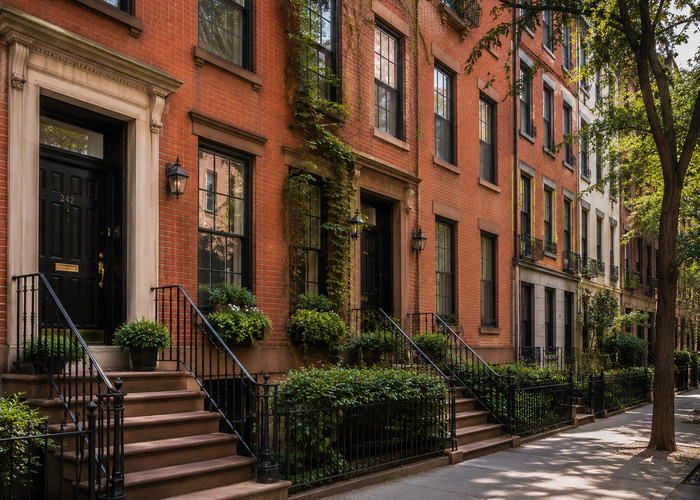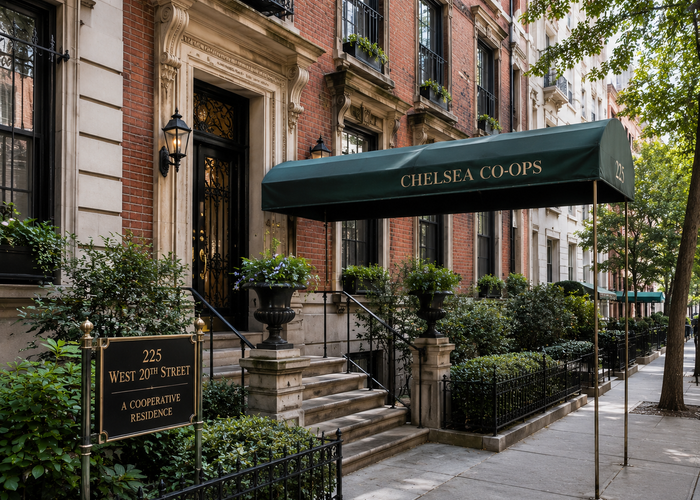
Lofts, condos, co-ops and townhouses in Chelsea, with straight answers on pricing and timing.

Smooth transaction with limited risk
No pressure to over pay and buy within a certain time period
A team of people that will be with you even after the transaction is complete
Live listing data provided by OLR IDX. Need help? Contact us or log in to your customer account.
Chelsea's real estate market spans a $838,000 co-op on a quiet mid-block to a $2.9 million condo overlooking the High Line-and the factors that determine whether a property is fairly priced, a strong investment, or a costly mistake vary block by block, building by building, and floor by floor. If you're buying or selling real estate in Chelsea, Manhattan, working with a Realtor who understands those distinctions is the difference between a confident transaction and an expensive lesson.
Stanley Montfort is a Chelsea Realtor who advises buyers and sellers through every phase of the transaction-property evaluation, building financial review, pricing strategy, negotiation, and closing-drawing on deep familiarity with Chelsea's micro-markets, property types, and the specifics that drive value in this neighborhood.
What separates an effective Chelsea real estate agent from a generalist is the ability to interpret how value works differently across this neighborhood's varied housing stock. Stanley Montfort approaches every Chelsea transaction with three priorities tied directly to client outcomes:

Chelsea buyers and sellers face decisions that require property-type expertise, transaction knowledge, and local market interpretation. Here's how Stanley Montfort supports each side of the transaction.
A Chelsea buyer's agent does more than schedule showings. Stanley guides buyers through property identification, due diligence on building financials and legal configuration, comparable sale analysis, offer strategy, and negotiation. Whether you're evaluating a sponsor unit in a new West Chelsea development or a pre-war co-op near Seventh Avenue, buyer representation includes a full assessment of carrying costs, board requirements, renovation potential, and resale outlook. The goal is ensuring you understand the complete ownership proposition-not just the asking price.
Selling real estate in Chelsea starts with accurate pricing grounded in building-specific comparable sales-not neighborhood averages. Stanley develops a marketing strategy tailored to your property type and its most likely buyer pool, including professional staging guidance, photography direction, and targeted exposure during the critical first two weeks on market. For co-op sellers, this includes anticipating board approval timelines and flip tax impact on net proceeds. For condo sellers, it means positioning your unit against competing inventory in the same tier.
Whether you're considering a sale, refinance, or estate planning decision, Stanley provides a comprehensive Chelsea market analysis that evaluates your property against recent closed sales, active competing listings, building financial health, and current buyer demand in your specific micro-market. Neighborhood-wide price-per-square-foot averages alone often produce inaccurate valuations-I assess how your unit's floor, exposure, views, condition, building amenities, and monthly costs compare to the most relevant transactions.
Here's what to expect when you engage Stanley Montfort for buying or selling real estate in Chelsea.
The process begins with a detailed conversation about your real estate goals, timeline, financial parameters, and priorities. For sellers, this includes a property visit and preliminary market analysis. For buyers, it means defining your search criteria across Chelsea's varied property types and price tiers. This initial consultation is designed to give you actionable market context before any commitment.
For buyers, Stanley curates property options based on your criteria and conducts building-level due diligence before recommending showings-reviewing financials, board policies, recent sales, and carrying costs. For sellers, this phase involves preparing your property for market: pricing strategy, pre-listing improvements, staging, professional photography, and a marketing timeline calibrated to Chelsea's current absorption rates.
Chelsea transactions carry complexities that require experienced negotiation. For co-op purchases, board approval can add 30–60 days to closing timelines, affecting offer structure and contingencies. For condos, sponsor sale terms, closing cost allocation, and concession negotiations require careful attention. Stanley manages these details through contract execution, attorney coordination, and closing-ensuring nothing is overlooked.
Chelsea's residential market in mid-2026 reflects moderate price growth, longer negotiation cycles, and significant variation between property types. According to Zillow, the typical home value in Chelsea is approximately $1,621,000, up roughly 3.6% year-over-year, with homes going to pending in a median of 62 days. But that single number obscures the most important story.
The gap between Chelsea condos and co-ops is substantial. PropertyShark data for May 2026 shows median condo sales at approximately $2.9 million-up 59% year-over-year-versus co-ops at $838,000, up about 47.1%. These are different markets serving different buyer profiles, and a Chelsea real estate broker needs to interpret them accordingly.
Several dynamics shape decision-making right now:
One mistake I frequently see buyers make is evaluating Chelsea properties using Manhattan-wide statistics. Chelsea's median sale price runs well above Manhattan's overall median of roughly $1.1 million for co-ops and condos combined-but individual Chelsea buildings can range from well below to well above that figure depending on property type, location, condition, and carrying costs.
Chelsea condominiums range from glass-tower new developments near the Hudson River to boutique conversions on interior side streets. New condos near the High Line commonly command $1,800–$2,500+ per square foot, while resale condos vary widely depending on building, floor, views, and amenities.
When comparing two Chelsea condos, I look beyond asking price to the full cost of ownership: common charges, real estate taxes, any special assessments, and how those costs compare to similar buildings. A newer building with a pool, concierge, and rooftop terrace will carry higher common charges-but those amenities may also drive stronger resale demand.
Key considerations for Chelsea condo buyers:
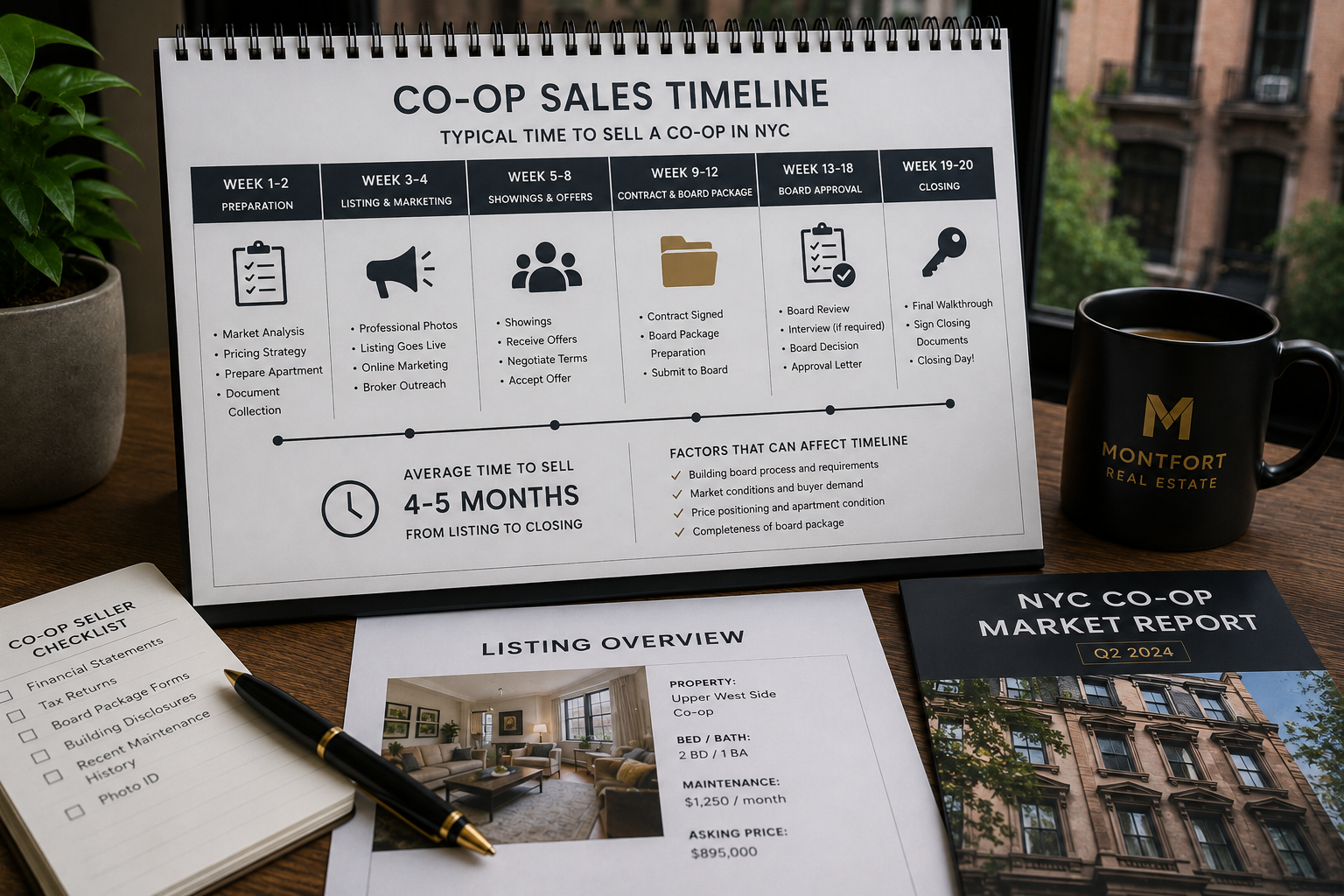
Co-ops represent Chelsea's most accessible entry point, with median prices around $838,000–$960,000, but they come with structural complexities that require careful evaluation. The board approval process typically adds 30–60 days to closing and involves personal financial disclosure, proof of liquidity, and sometimes specific income-to-asset ratios.
One question I always discuss with sellers in Chelsea co-ops is the building's flip tax. Co-ops may impose transfer fees-often 1–3% of the sale price-that reduce your net proceeds. These fees are only legally enforceable when authorized in the offering plan or proprietary lease, so it's essential to verify the building documents before setting your pricing expectations.
Key considerations for Chelsea co-op buyers and sellers:
Loft properties are an important part of Chelsea's real estate identity, particularly in West Chelsea where former warehouses and industrial buildings have been converted into residential spaces with 12–20-foot ceilings, oversized windows, and open floor plans. These homes attract buyers willing to trade conventional amenities for architectural character and spatial drama.
Many buyers focus on square footage but overlook how efficiently that space is configured. A 1,500-square-foot loft with 14-foot ceilings and a single column line offers a very different living experience than one with multiple structural columns breaking up the floor plate. I evaluate ceiling height, window exposure, column spacing, and layout flexibility alongside the standard financial metrics.
Critical due diligence for Chelsea loft purchases:

Chelsea townhouses offer what almost no other property type in the neighborhood can-private outdoor space, multi-level living, and in many cases, the ability to configure the building for your specific needs. But they also represent the most complex purchase in the area.
Width, building depth, lot dimensions, and net usable square footage matter more than gross square footage. A 20-foot-wide townhouse with a full-depth garden level offers substantially more usable space than a 16-foot-wide building with a compromised lower level. I evaluate foundation condition, mechanical systems (plumbing, HVAC, electrical, roof), and renovation quality before advising clients on pricing.
For townhouses within the Chelsea Historic District-designated in 1970 and expanded in 1981-facade alterations, rooftop additions, and visible exterior modifications require a Certificate of Appropriateness from the NYC Landmarks Preservation Commission. This can significantly affect renovation timelines and costs.
Comparable sales for townhouses are rare and highly variable. I analyze total price, net usable space, renovation quality, lot coverage, and outdoor exposure rather than relying on price-per-square-foot metrics that don't translate well across this property type.
Chelsea is not one uniform real estate market, and an experienced Realtor in Chelsea NYC evaluates each submarket on its own terms.
West Chelsea and the High Line Corridor. The blocks between 14th and 30th Streets along the Hudson-flanking the High Line-carry Chelsea's highest price premiums. The Special West Chelsea District zoning allows for taller residential development and has attracted architecturally distinctive new construction. Properties here benefit from water views, park adjacency, proximity to gallery districts, and building designs that emphasize large windows and high ceilings. Buyer demand remains strongest in this corridor, particularly for homes with direct High Line or river exposure.
Chelsea Historic District. The historic district's Greek Revival, Italianate, and Gothic Revival rowhouses and early multi-family buildings create architectural character that commands a premium from buyers who value preservation. However, the stricter facade and alteration controls imposed by the Landmarks Preservation Commission can limit modifications-a factor that affects both purchase decisions and renovation budgets.
Blocks Near Major Avenues. Proximity to Sixth, Seventh, and Eighth Avenues-with their subway access, retail, and dining-increases demand and pricing. Corner units and higher floors on avenue-facing buildings benefit from better light and views. Interior mid-block walk-ups and lower-rise buildings typically offer more affordable access to Chelsea but may involve trade-offs in natural light, noise exposure, and views.
New Development Versus Pre-War Stock. New luxury condos and pre-war co-ops serve fundamentally different buyer pools. New development attracts buyers prioritizing amenities, modern finishes, and flexible ownership structures. Pre-war buildings appeal to buyers who value lower monthly costs, established building communities, and architectural authenticity. A Chelsea NYC Realtor helps clients understand which type aligns with their priorities and long-term plans.
How these micro-markets interact matters for both buyers and sellers. When I advise a seller on pricing strategy, I evaluate not just recent sales in their building but also what competing inventory looks like in adjacent micro-markets-because a buyer considering a resale condo in central Chelsea may also be looking at new development in West Chelsea or a loft conversion near the gallery district.
Chelsea's median sale prices run well above Manhattan's overall median. The typical home value is approximately $1,621,000, but the spread between property types is dramatic-median condo sales near $2.9 million versus median co-op sales around $838,000. Chelsea commands a premium over neighborhoods like Hell's Kitchen, Gramercy, and parts of the Upper East Side, driven by its architectural diversity, High Line proximity, gallery culture, and the mix of homes available. However, pricing varies significantly by building, floor, exposure, and micro-market location within Chelsea itself.
Building financial health directly affects your monthly carrying costs and your property's resale value. For co-ops, I review maintenance fees, the building's underlying mortgage burden, reserve fund adequacy, recent assessments, and the current budget versus actual expenses. For condos, common charges and real estate taxes are the primary ongoing costs-but pending capital projects or tax abatement expirations can change those numbers materially. Buildings with deferred maintenance, thin reserves, or escalating assessments present risks that may not be visible in the listing price alone.
Proximity to the High Line is one of the strongest value drivers in Chelsea real estate. Properties with direct views of or immediate access to the High Line-particularly in West Chelsea's rezoned corridor-command significant price premiums per square foot. But the effect is not uniform: a unit on a high floor with unobstructed park views will capture far more premium than a ground-floor unit on the same block. I help buyers and sellers quantify this impact through building-specific comparable sales rather than broad assumptions.
New development purchases in Chelsea involve different financial mechanics than resale transactions. Sponsor sales may include closing cost structures where the buyer covers NYC and NY State transfer taxes, and common charges in newer buildings with extensive amenities tend to be higher. Buyers should evaluate the developer's track record, building construction quality, projected common charges, and how the unit's pricing compares to resale inventory in the immediate area. One issue I consistently raise with new development buyers is future resale competition-if the building hasn't fully sold out, your eventual resale may compete against the sponsor's remaining inventory.
Whether you're evaluating a Chelsea property for purchase, preparing to list a home for sale, or need a detailed market analysis to inform your next decision, Stanley Montfort provides the local expertise and transaction guidance that Chelsea's complex market demands.
Every Chelsea real estate conversation starts with your specific property or goals-not a generic sales pitch. Contact Stanley for a no-obligation consultation to discuss your Chelsea real estate plans.
Educate yourself on these 15 costly mistakes — the difference between a successful purchase and a disastrous one.
Looking at a brownstone in Chelsea? Taking the time to educate yourself on these 15 costly mistakes can make all the difference between a successful purchase and a disastrous one.
Loading live Google reviews…
Read helpful resources and articles related to the area.
On the Upper West Side, we observed a distinct trend that diverges from the citywide patterns. Specifically, the…
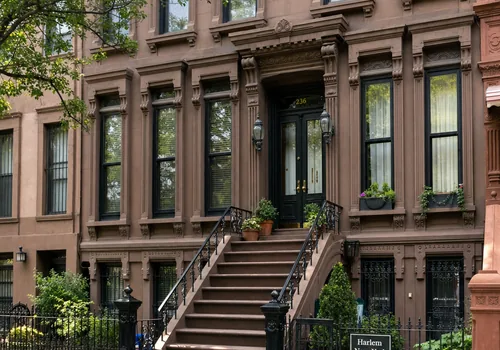
The Harlem brownstone market has seen an increase in sales activity since this time last year. In Q2…

Are you searching for your dream home in one of New York City’s most sought-after neighborhoods? Look no…